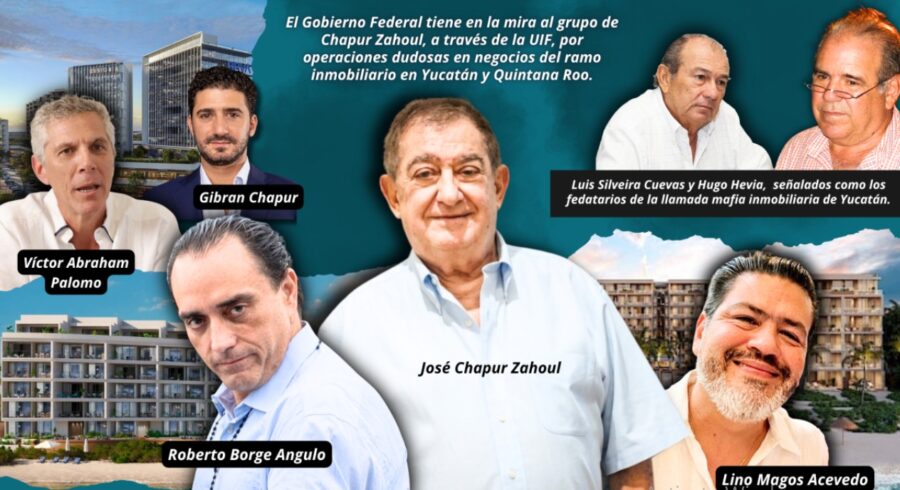

MÉRIDA, YUCATÁN — Hotel mogul José Chapur Zahoul, recognized as one of Mexico’s most influential business figures, has come under intense scrutiny for his alleged involvement in a money laundering network tied to former Quintana Roo Governor Roberto Borge Angulo.
According to an investigation published by Sol Yucatán, Chapur Zahoul—alongside former Borge official Lino Magos Acevedo—is accused of using more than twenty real estate and hospitality companies to launder large sums of public capital siphoned from the Quintana Roo government. The funds were reportedly funneled into acquiring high-value coastal land across four key tourist municipalities in Yucatán: Hunucmá, Progreso, Telchac, and Sinanché, an area forming part of the state’s emerging “Emerald Coast.”
The report highlights that the operations relied on local corporate structures allegedly facilitated by controversial notary publics accused of incorporating shell companies. Among the projects implicated is “Dunas de Chuburná,” where Magos Acevedo reportedly leveraged connections with local authorities to secure environmental and construction permits. Furthermore, Chapur Zahoul’s son-in-law, Víctor Manuel Abraham Palomo, is identified as a key operator behind major luxury developments including Paseo 60, Torres 60 Norte, and the beachfront complex “Siela” in Telchac Puerto. The overall value of suspicious investments tied to these entities is estimated at over $600 million USD (around 12 billion Mexican pesos).
Mexico’s Financial Intelligence Unit (UIF) and the Federal Attorney General’s Office (FGR) are actively monitoring the group for complex pyramid-style laundering operations, which reportedly involved acquiring land at depressed prices through government corruption before inflating its market value. The federal investigation could lead to frozen bank accounts, while local environmental groups have also criticized the projects for causing severe ecological damage to protected coastal dunes and sea turtle nesting sites.
Source: Sol Yucatan